

Every year, International Women’s Day invites reflection on the progress women have made and the work still left to do. In 2026, the theme “Give to Gain” feels particularly relevant to the Afrobeats ecosystem. For all its global success, the genre still struggles with one recurring conversation: the limited collaboration among female artists.
Afrobeats has exploded into a global cultural force, but its power structure remains uneven. Female artists are still a minority in the industry and often face structural barriers ranging from funding gaps to gender bias in label investments. Analysts and commentators have long noted that women are underrepresented in record deals and industry leadership roles, despite their influence on the genre’s growth.
The Myth of the “Only One”
Historically, female artists in the Nigerian music space were often pitted against each other by fans and media alike. If one was the “Queen of Afrobeat,” another had to be the pretender to the throne.
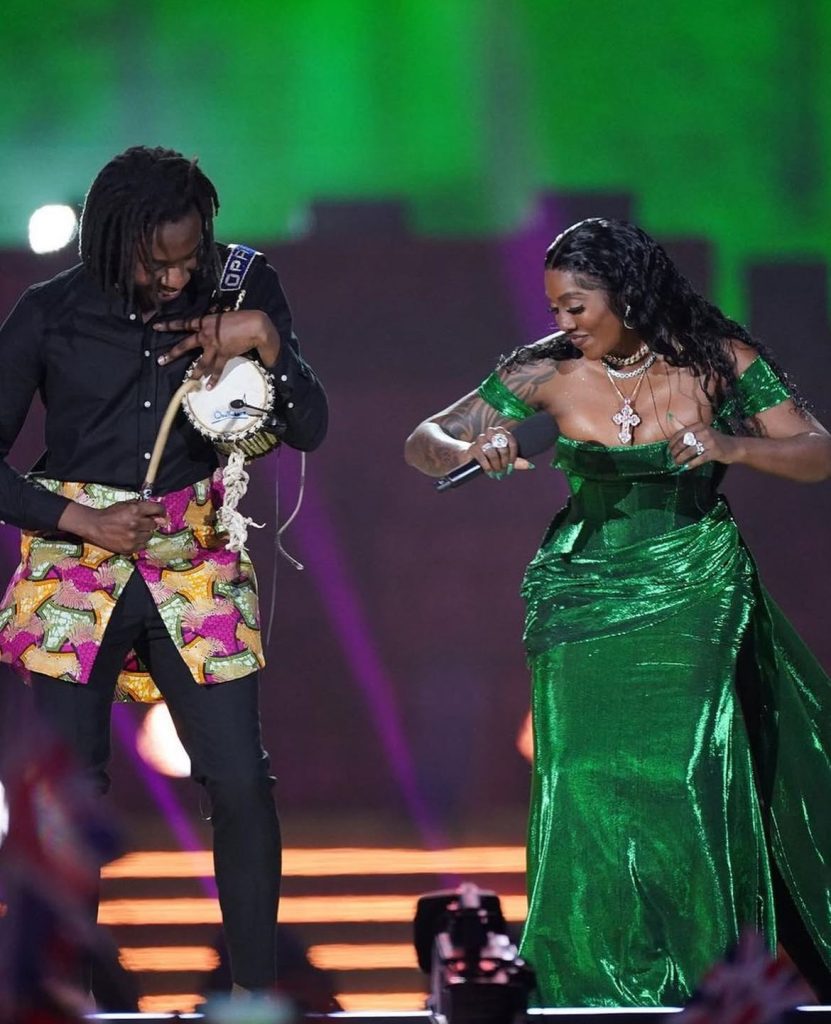
Matter of fact, women will always be in fierce competition with other women at the top because they feel there is limited room for women at the very top. It’s been consistent for decades. This competitive friction was a byproduct of an industry where women make up less than 5% of producers and engineers, and where male gatekeepers often decided “when, who, or where” women should appear.
However, the 2020s sparked a “Leading Vibe” movement. We are seeing a shift from women being “good for a female artist” to being global titans who define the genre’s infrastructure.
The Collaboration Gap Debate
In an industry where male artists frequently feature one another and build collective momentum with more dominance, women often move in isolated lanes.
Most of these female artistes feel that there aren’t many women who have a platform to put other upcoming artiste on the spotlight, or the platform they have isn’t as big enough to do so compared to their male counterparts who have more revenue, a larger audience, and more streams.
You May Also Like: The Cost of a Dream: Why the Music Industry is Forcing Its Best Talents to Quit
They go further to claim that these male artistes end up supporting only men over female artistes who are more deserving. I find this logic to be untrue and very flawed because there’s no fact backing it.
Male artists built the Afrobeats ecosystem partly through collaboration. Features are how audiences cross over, how artists inherit each other’s fan bases, and how movements grow, both locally and internationally. Refusing to collaborate only reinforces the scarcity narrative that women themselves champion but are still trying to escape.
Historically, men have actually supported a whole lot of women’s careers. From the likes of Jay Z who brought the likes of Rihanna and arguably Beyonce, in the afrobeats space, you can’t talk about Tiwa Savage rise to fame without mentioning Don Jazzy.
I can go on and on; Simi was cosigned by Falz, Fave was supported heavily by Mr Eazi, Olamide, and Davido, who gave her one of her biggest hits. Talk about Bloody Civilian, you’ll remember Odumodu Blvck giving her one of her biggest hits as well.
The real issue with the industry on this matter is gatekeeping. Most of these artists are exploited regardless of their gender, but I don’t think that the argument that men are not genuinely helping women without exploiting them or that men would most likely help men before helping women necessarily doesn’t hold any water because we’ve seen more men than women help women in their careers, especially in the music industy.
So in essence, I believe that if you have the means to help somebody, it should be based on their talent and consistency and willingness to grow rather than on some “men supporting men” “women supporting women” gender bias shit.
The Few Times It Has Happened
Ironically, whenever women actually collaborate and show support in Afrobeats, the results are powerful.
Examples exist, but they are rare. Songs like “Men Are Crazy” by Simi featuring Tiwa Savage, “Loyal” by Simi featuring Fave, and “Pempe” by Sheyi Shay and Yemi Alade show what happens when female voices share the same record. Most of these collaborations/songs, I didn’t know they even existed but oh well…. cheers to its existence.
Tems paying homage to the OGs after she won a BET Award shows a successful artist acknowledging that her path to sucess was paved by those who fought the battles before her. She took to social media to specifically thank the women who came before her. She tagged ASA, Tiwa Savage, Simi, Yemi Alade, Waje, Omawumi and Niniola, saying “thank you for existing… because someone saw that and became inspired”
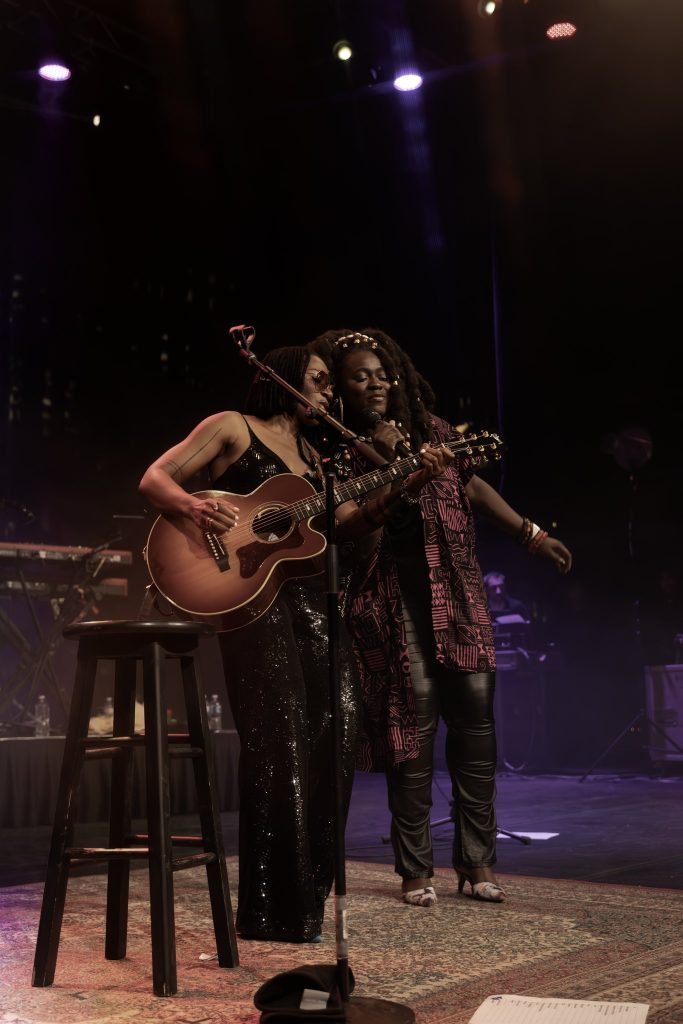
Beyond studio recordings, even live performances prove how powerful these moments can be. When Asa made a special appearance during a live performance of “Sewa,” it reminded audiences how magical it is when women share the stage instead of competing for it.
These moments excite fans precisely because they are so uncommon.
The Industry Needs More of This
Afrobeats is now global. The audience is bigger than ever. The idea that there is only room for one successful woman at a time is outdated and damaging.
You May Also Like: Lloyiso Releases Debut Album ‘Never Thought I Could – Pt 1’
If the biggest female stars in the industry intentionally platformed emerging female artists through features, tours, and live performances, the ripple effect would be enormous. The industry would gain more diversity in sound, more stories, and more commercial power.
Give to Gain
The principle of this years International Women’s Day theme is quite simple, When established artists create opportunities for others, the entire ecosystem grows.
Male artists in Afrobeats have long understood this formula. Features and collaborations help expand fan bases, push records onto charts, and introduce new artists to wider audiences. For female artists, the same model could be adopted and yield transformative results.
Imagine a landscape where the biggest women in Afrobeats consistently spotlight emerging voices. Where an A list artist invites a rising singer onto a record, not just as a feature but as an intentional platform. Where a collaboration becomes a form of mentorship. And this can happen when women believe in their voice and platform, through grit, confidence and hard work.
You May Also Like: Kemuel Kicks Off 2026 With New Single “Ovah,” Launching a New Project Era
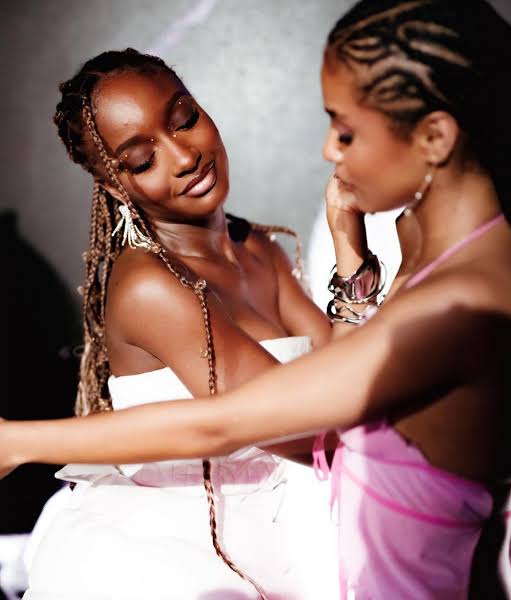
This is already happening in small but meaningful ways. The public friendship between Tems and Ayra Starr has sparked optimism among fans who see their solidarity as a symbol of what the next generation could represent.
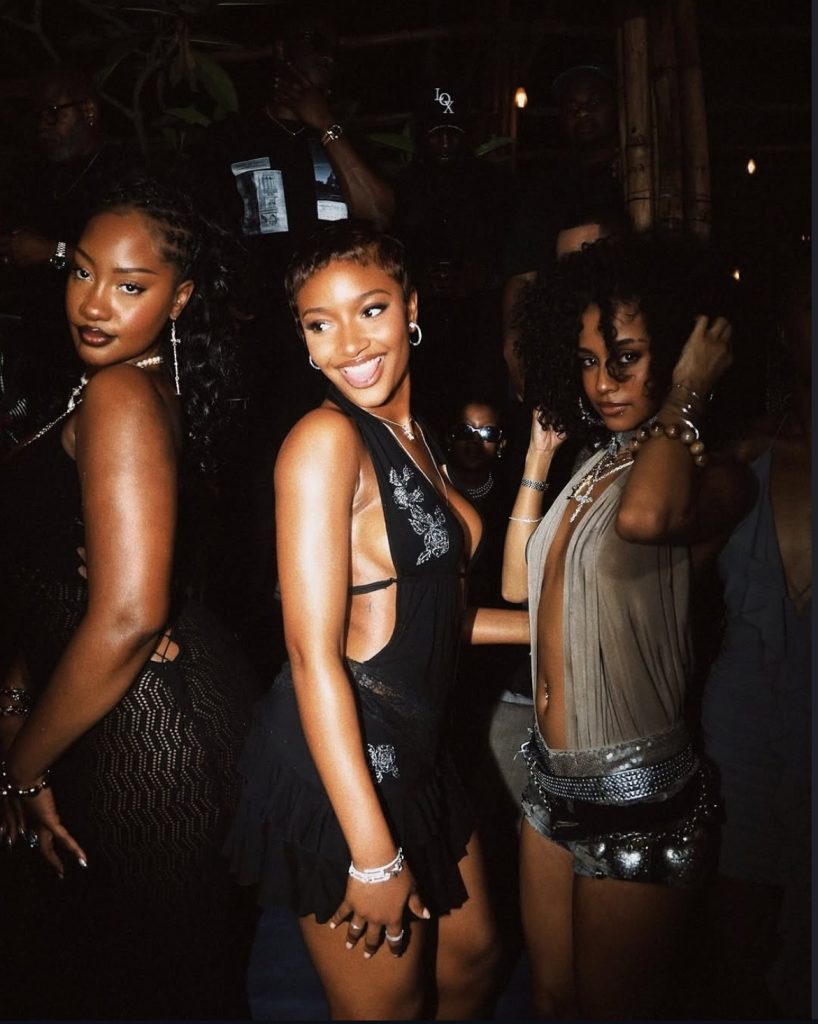
Women in Afrobeats have fought hard for visibility in an industry that often under invests in them. But the next stage of progress requires something equally important. If male artists can build empires together through collaboration, there is no reason women cannot do the same.
Because in music, just like in life, sometimes the fastest way to gain more is simple.
Give first.