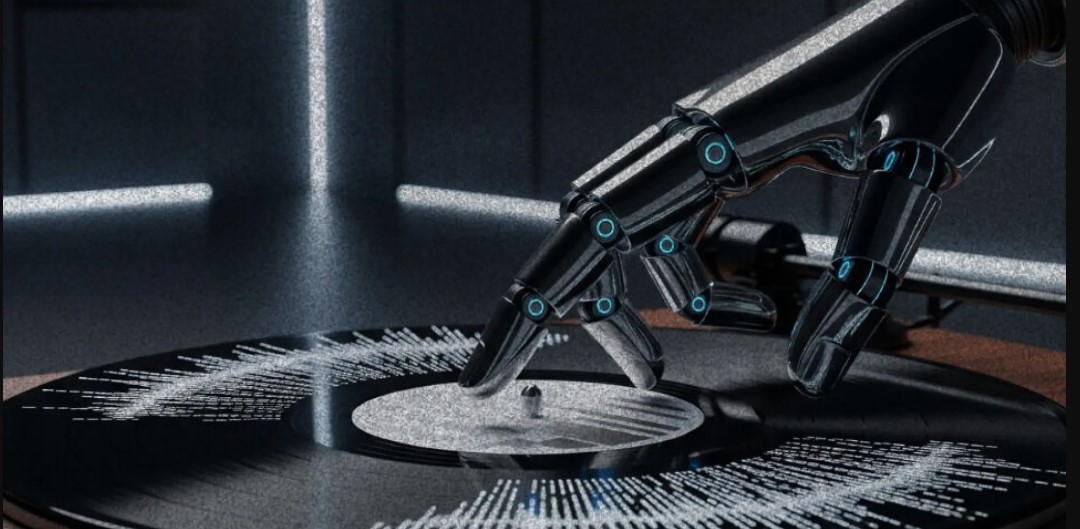

The debate around AI in music has officially left the futuristic sci-fi realm and landed squarely on our timelines and playlists. If you’ve spent any time tracking the industry lately, you know we’re living in a massive plot twist. We are watching an era where a bedroom producer can drop a viral track featuring a synthesized megastar(we all bopped to the Afro-Soul AI version of Stromae’s Papaoutai) and also an era where malicious people can upload previews of real musicians music to AI engines/generators, upload the AI-generated versions of these artiste’s songs to all major streaming platforms.
These songs are thereby copyrighted by the distributors, so when the original artists try to upload their own human songs, they are denied access because of the already existing copyrighted AI versions of their voices. The possibility of this is so scary and the fact that there are artistes who are a victim of this is absolutely insane!
With this, we can see that AI is slowly changing the music world, but not everyone sees that as a good thing. From machine-generated songs to AI piracy, technology is blurring the line between real artistry and artificial creation in the music ecosystem. While these tools may make music faster and easier to produce, they also raise serious concerns about originality, creativity, and emotional depth that only human artists bring to music. No matter how much AI continues to grow in the industry, these human traits cannot be developed by the algorithm, and many fear that with its growth, AI could replace authentic expression, reduce artistic value, and create ethical problems around ownership and identity in music.
In this article, I’ll be exploring both sides of the conversation, looking at the benefits of AI in music while also unpacking the ethical concerns surrounding artificial creativity
Let’s look at the facts, break down the reality, and talk about why the “soul” of music still can’t be fully replicated by machines.
The Fact: AI In Music Is Extremely Efficient
To be fair, AI has genuinely improved the music production process in many ways. From generating loops and suggesting chord progressions to mixing vocals and isolating stems, AI tools are helping artists and producers work faster and more efficiently than ever before.
For independent creatives, especially, this is a huge advantage. Tasks that once took hours of technical work can now be done in minutes, making music production more accessible and less expensive. AI also helps streamline the creative process, giving artists more time to focus on ideas, experimentation, and execution rather than tedious engineering work.
At its best, AI works like a powerful assistant in the studio, speeding up production and helping creators bring their visions to life with fewer limitations.
The Plot Twist: The Viral “Ghostwriter” Era
From being an efficient tool for music production, it developed into making actual music. We can’t talk about the genesis of AI music without talking about the anonymous producer Ghostwriter, who shook the industry by dropping a track featuring uncanny, AI-synthesized vocals of Drake and The Weeknd.
You May Also Like: Asake M$NEY Album Feels Like Success Having an Existential Crisis
Initially, the industry panicked, screaming copyright infringement. But today, the culture is pivoting fast. We are already looking at a future where top-tier artists might formally license their AI voice models, allowing fans and producers to create “collaborations” in exchange for a 50/50 revenue split. And it pissess me off because a lot of people are lapping hard on this AI music, see the numbers it’s doing, the amount of content around it. As a marketing driver and a new revenue stream, it’s brilliant. That’s why artistes voluntarily involve themselves with AI models of their voices to create music. I guess their mindset is that if you can’t beat the algorithm, license your voice to it.
The Reality: You Can Mimic a Voice, But You Can’t Copy the Soul Of The Music
Here is where the cold, hard data meets the human element. AI can analyze every Afrobeats groove, every trap cadence, or every pop melody ever made, mash them together, and spit out a technically perfect track. Agreed.
But AI operates entirely on encoded knowledge. It can only reference what has already existed. It doesn’t know what it feels like to have its heart broken by a wicked Igbo woman, it doesn’t know the grief of losing a close friend, the euphoria of an unexpected win after 22 years, or the deep, complex cultural roots that make a baseline hit a certain way.
It amazes me that psychological studies have proven that audiences have a built-in “AI Composer Bias.” When listeners know or suspect a song was generated by a machine, they consistently rate it lower. Why? Because, as humans, we don’t just consume music as a product; we consume it as an exchange of energy and shared lived experiences. I have the same reaction to other AI-generated forms of art, and not only music. Be it pictures, art paintings, films, etc., for the moment, unsuspecting me would be amazed, but immediately I realize it’s AI, it kills the spark in my eye and turns the burst of bright colourful joy in my heart into a bleak and gloomy feeling.
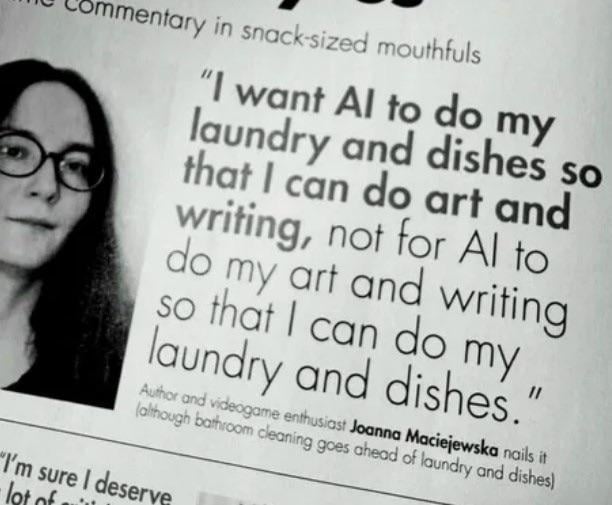
When you listen to an artiste lay their vulnerability bare on a track, you are connecting with their humanity. AI is neutral. It doesn’t have an intention, it doesn’t have a soul, and it definitely doesn’t have a pulse. It’s just there
AI In Music Cover Art
The use of generative AI for music cover art has sparked major backlash across the industry. Artists should be banned from using AI cover. This trend of AI art is horrendous and deserves to be in the dustbin. Because where are we going as a society?? Using AI for your cover art, whether you are a graphic designer or artiste, shows another level of laziness. I’m not going to say I would’nt listen to the song if the art cover was AI generated, before one lowlife somewhere would drag me for judging a book by its cover, but its definitely going to be walked over, and I shall not be seen associating with such music (that involves me sharing a screenshot of it, if luckily the song turns out to be good).
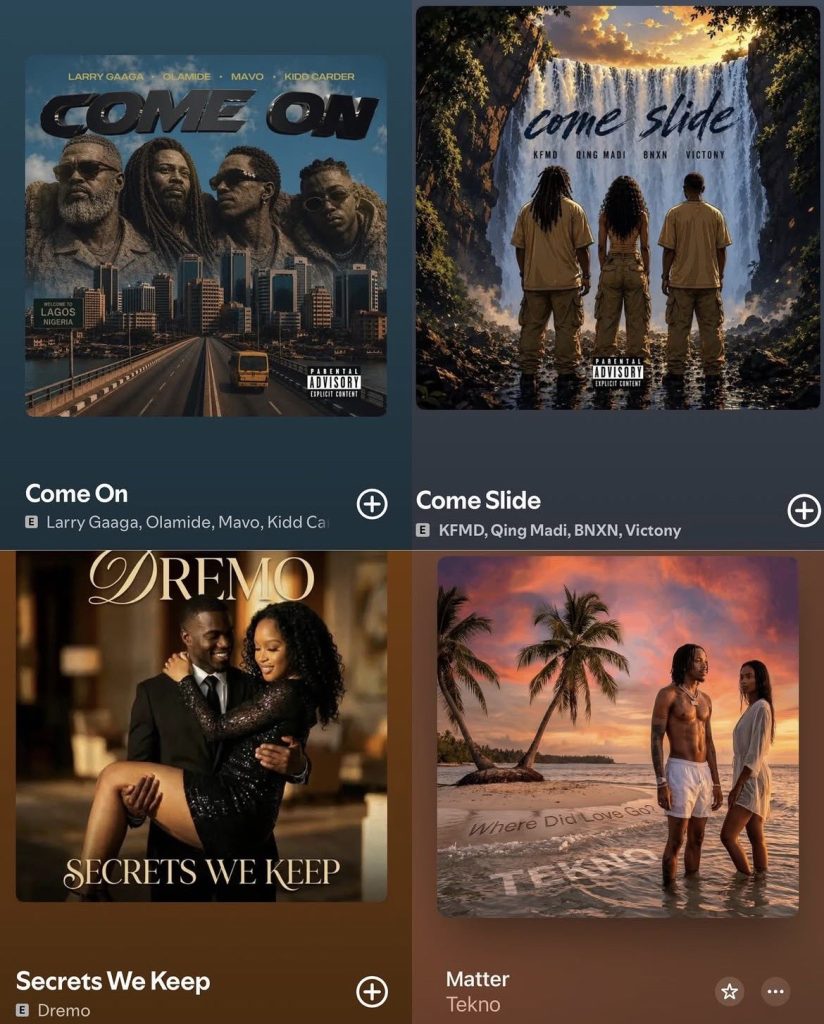
But come on, the lack of taste is unsettling. I think this issue isn’t getting enough outrage and backlash because music/album art covers aren’t a prominent award category in music award shows/events. AI simply amplifies whatever direction that’s given to it. If there’s no visual literacy or intention behind it you get fast mediocrity.
It also shows the industry undermines the input of creatives; we hope to see the engagement of art directors and creative designers towards the creation of these things.
The Final Verdict
AI isn’t going to kill music, nor is it going to completely replace the artists we love.
Let the machines handle the tedious stem separations, the quick melody starting points, and the technical heavy lifting. That just frees up more time for human creators to do what they do best: pour genuine emotion, vulnerability, and culture into the art form.
And just a quick advice to artiste concerning copywriting their music to avoid cases of AI practically stealing your voice; be careful when you put up previews, samples or unfinished songs for people to hear. I know that this is a very normal thing to do in today’s arena, especially for small artistes who have little to no momentum. But, in as much as you have this as a reason to build in public try to finish it, copyright it, then distribute it to streaming and then upload on YouTube.
AI might be able to build a flawless sonic structure. But it takes a human heart to bring it to life.